
Life Doesn't Stop at Work: How Strong Leaders Support Struggling Employees Without Losing Momentum
Apr 24, 2026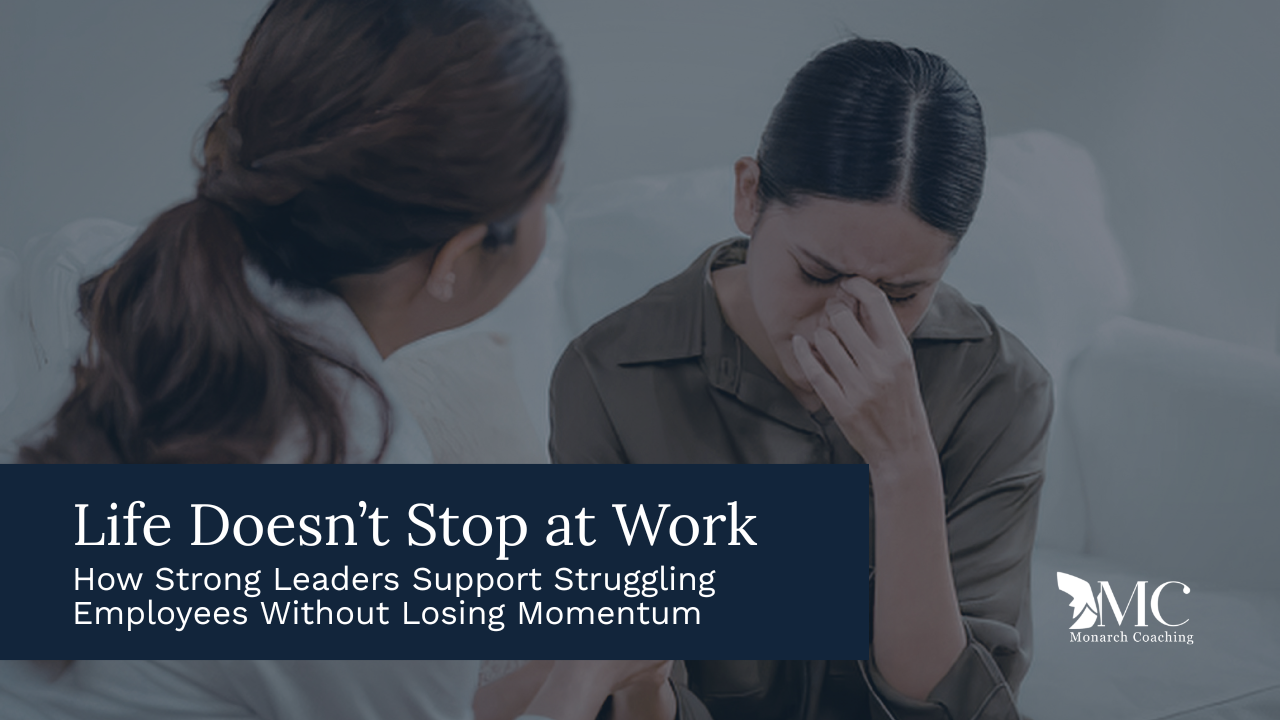
“Life doesn’t pause when we walk into work.”
And as a leader, you’ve likely seen it firsthand.
A high-performing team member suddenly becomes disengaged. Deadlines slip. Energy shifts. Something feels… off.
The instinct for many leaders? Avoid it, assume, or overstep. But the most effective leaders do something different: they lead with awareness, empathy, and structure.
Because supporting your people and maintaining performance isn’t a contradiction. It’s leadership.
Empathy Starts with Awareness
Before anything else, strong leadership begins with noticing.
When you observe changes in behavior, such as lower engagement, missed deadlines, or mood shifts, it’s an opportunity to lean in with care, not assumptions.
Try simple, human-centered language:
- “I’ve noticed a change in your energy. How are you doing?”
- “Is there anything you need more support with right now?”
These moments matter more than you think.
Because when leaders acknowledge what’s happening, they send a clear message:
“You matter more than your output.”
1. Build Psychological Safety (Without Overstepping)
Creating emotional safety doesn’t mean becoming a therapist, it just means creating space for honesty.
What this looks like in practice:
- Allow space for conversations (when appropriate)
- Respect boundaries - don’t pry for details
- Encourage peer support (sometimes people open up more to a trusted colleague)
- Maintain confidentiality at all times
(Exception: escalate immediately if there’s risk of harm)
Know your role:
You are a leader, not a counselor.
Instead of trying to “fix” the situation, guide your team members toward available resources like EAPs (Employee Assistance Programs) or HR support.
Offer practical flexibility when possible:
- Temporary workload adjustments
- Flexible start times
- Short-term schedule changes
Sometimes, a small shift, even just starting 30 minutes later for a few weeks, can make a significant difference.
Key Insight:
When people feel safe being human, they’re more likely to bounce back stronger.
2. Balance Compassion with Accountability
Here’s where many leaders struggle: Showing empathy does not mean removing expectations.
It means adjusting them thoughtfully, not indefinitely.
Strong leadership sounds like:
- “We’re here to support you. We’ll revisit your workload expectations after you've had some time.”
- “How can we make this work for both of us right now?”
Focus on:
- Clear timelines
- Transparent expectations
- Regular check-ins
Remember:
You’re accommodating needs and circumstances. You're not enabling long-term avoidance of responsibility.
There may come a point where a role no longer aligns with someone’s current life situation, and having that conversation with honesty and care is also caring and effective leadership.
3. Protect the Team Dynamic
When one team member is struggling, the entire team can feel the impact.
Your role is to protect both the individual and the collective culture.
How to lead here:
- Model discretion. Shut down gossip before it starts
- Reinforce empathy as a team value
- Encourage kindness without overburdening others
Culture isn’t defined in "big moments," it’s best when reinforced in small, everyday behaviors.
Reminder:
Compassion doesn’t mean carrying someone’s pain. It means walking beside them with understanding.
Final Thought
Leadership isn’t tested when everything is going well. It’s tested in the moments where humanity and performance intersect.
When you lead with awareness, empathy, and structure you build trust, retention, and resilience across your entire team.
Call to Action
If your organization is navigating moments like these, or you want to build leaders who know how to handle them with confidence and care, Monarch Coaching can help.
We specialize in developing emotionally intelligent leaders who create sustainable, high-performing cultures.
👉 Schedule a call with Monarch Coaching today to explore how we can support your leaders and your teams.
#LeadershipDevelopment #EmotionalIntelligence #PeopleLeadership #WorkplaceCulture #PsychologicalSafety #LeadershipCoaching #EmployeeExperience #ManagerSkills #InclusiveLeadership #MonarchCoaching
